

Uncategorized
How Strategic Brand Positioning Drives Purposeful Business Growth
|

Uncategorized
How Strategic Brand Positioning Drives Purposeful Business Growth|
Strategic brand positioning helps organizations differentiate in competitive markets, build stakeholder trust and support long-term business growth. A strong position connects business strategy with organizational purpose, values, culture and customer expectations. It guides how a company communicates, operates and delivers on its promises.
AI is accelerating innovation. Evolving ways of working are reshaping employee expectations. Customers and partners expect transparency, values alignment and meaningful action. Organizations need clarity about what makes them different and why audiences should believe their promises.
Whether a business is launching a product, entering a new market or navigating transformation, strategic brand positioning aligns its identity with the experiences people have every day.
What is strategic brand positioning?
Strategic brand positioning defines how an organization wants to be understood and differentiated in the marketplace. It connects business strategy, purpose, mission and values to a distinctive promise that resonates with target audiences. Brand positioning involves more than creating a logo or visual identity. It also shapes the brand’s story, visual communication and customer experience.
A strong position answers five questions:
- Who is the organization and what does it stand for?
- What value does it deliver?
- How does it differ from competitors?
- Why should audiences believe the promise?
- How does the brand support future business goals?
An organization’s purpose, mission and values should reinforce its position and guide how employees bring that position to life.
Why is strategic brand positioning important for business growth?
Effective positioning helps organizations build competitive differentiation, stakeholder trust, consistent experiences and employee connection. These outcomes create conditions for purposeful growth.
Clear competitive differentiation
Customers have many choices. A differentiated position makes the organization’s unique value easier to recognize and remember. Leaders must identify advantages that matter to target audiences and that the organization can credibly sustain.
Stakeholder trust and customer loyalty
The 2025 Edelman Trust Barometer describes widespread grievance toward institutions. In this environment, a brand’s values must show up through decisions and behavior. Customers assess the consistency between what a business promises and what it delivers. Brand loyalty can have financial value, but leaders should evaluate claims about growth and returns in the context of the underlying research.
A more consistent brand experience
People experience brands through websites, products, services, customer support and employee interactions. Strategic positioning establishes a common standard across those touchpoints. Inconsistent delivery can undermine trust even when marketing is compelling.
Greater employee engagement
Employees must understand the brand promise and how their roles support it. Gallup’s January 2026 engagement report found 31% of U.S. employees were engaged at work in 2025, unchanged from 2024. Consistent internal communication, leadership behavior and values-aligned culture help employees connect daily work to a shared purpose.
Who determines how a brand is perceived?
Stakeholders ultimately determine brand perception. Organizations can choose a position and tell their story. Customers, employees, partners, investors and communities decide whether that story reflects their experiences. Leaders must ensure their operations and behavior support the brand promise, then regularly assess gaps between intended positioning and actual perceptions.
How do organizations develop a strong brand positioning strategy?
A useful process starts with business goals and incorporates marketplace trends, competitive analysis and internal culture insights.
1. Align positioning with business strategy
A brand should reflect where an organization is today and help it reach its desired future. Leaders should examine its growth trajectory, strategic goals and operating model before committing to a position.
Beehive client example: One client brought three hospital systems together under one brand. Patients questioned whether their care would change and employees needed greater clarity about workplace expectations. Establishing a credible unified position required alignment around business strategy, operations, shared purpose and values. This work illustrates how brand positioning supports major organizational transformation.
2. Evaluate cultural and marketplace trends
Review political, economic, social, technological, legal and environmental shifts. Consider how AI, evolving workforce expectations and public trust may affect the business. Trend analysis helps organizations anticipate emerging audience needs without losing sight of their purpose.
3. Assess the competitive landscape
A competitive analysis reveals what other brands claim, how audiences understand them and which differentiated positions remain open. Ask which competitors matter, how the organization compares and what ownable territory it can credibly claim.
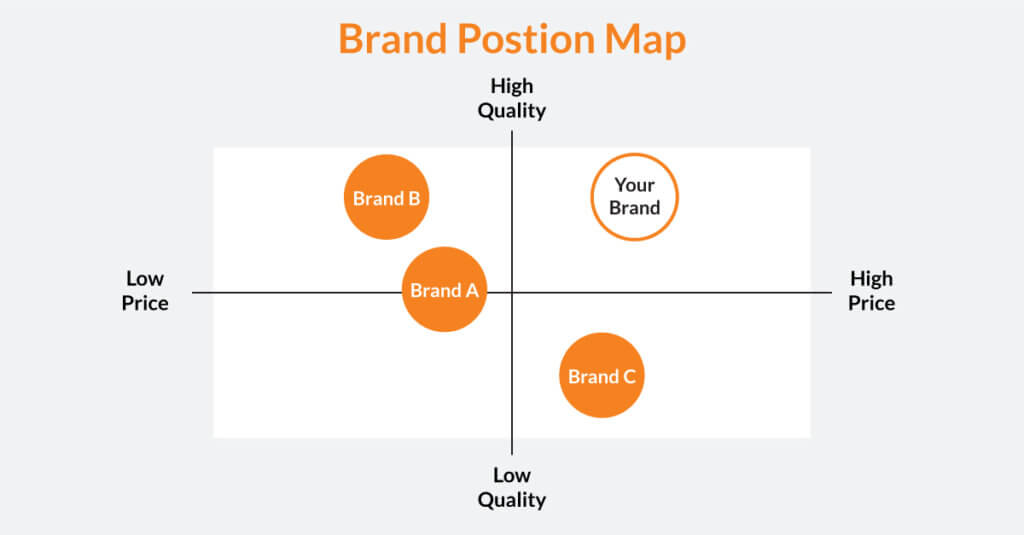
Original Beehive graphic: An illustrative brand positioning map helps compare the relative position of competing brands.
A brand positioning map can visualize competitors using attributes important to customers, such as perceived quality and price. It is a starting point for interpreting the market, not a substitute for audience research.
4. Assess internal culture and employee experience
Employees bring the position to life. Leaders should ask whether employees understand the promise, believe in it and experience it through organizational behavior. Gaps between external statements and internal realities can erode trust, recruitment and retention.
How does brand positioning guide brand expression?
Once the strategic foundation is clear, organizations can translate positioning into a recognizable personality, story and visual identity.
Define the brand persona and voice
A brand persona describes how a brand would behave if it were a person. It guides tone, imagery and decisions about what the brand should say. Brand personality should reinforce the organization’s strategy and audience expectations.
Apply brand personality across the customer journey
Customer journey maps identify how people discover, evaluate, purchase and maintain a relationship with a business. Organizations should apply brand personas consistently across the journey so each interaction reinforces the same promise.
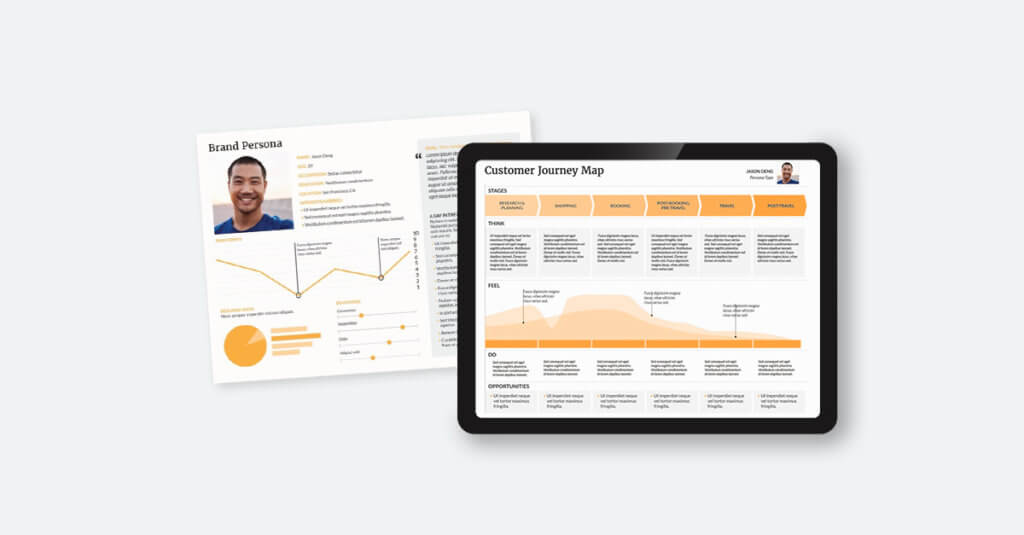
Original Beehive graphic: Brand persona and customer journey map examples demonstrate how strategy guides expression across touchpoints.
Develop the brand story and visual identity
A strong story explains who the organization is, what it believes and how it differs from competitors. Voice guidelines support consistent messaging across marketing, sales, internal communication and public relations. The visual identity uses design elements, including color, typography and imagery, to express that position.
The original post referenced Lucidpress research on brand consistency. This historical survey reported respondents’ estimated revenue opportunity from consistent presentation; the figure should not be treated as a measured causal outcome.
What is brand architecture and why does it matter?
Brand architecture clarifies the relationships among a company’s master brand, products and services. A branded house, endorsed brand system, house of brands or hybrid model can support different strategic goals. The chosen structure shapes naming, product introductions, acquisitions and audience understanding.
How can organizations activate brand positioning?
Brand activation translates strategy into decisions and experiences. A practical sequence is to align leaders, engage employees, equip managers, review customer touchpoints, align operational practices and measure outcomes. Meaningful activation requires coordination across marketing, human resources, sales, customer experience and business leadership.
Organizations that integrate brand promises into workplace culture are better positioned to reinforce a consistent experience for employees and customers.
How can organizations measure the business impact of brand positioning?
Measurements should reflect the organization’s strategic goals. Potential indicators include brand awareness, competitive perceptions, trust, customer retention, employee engagement, qualified leads and revenue trends. Social listening and voice-of-customer surveys can show whether external perception matches intended positioning.
A crisis offers another test of brand credibility. Organizations that have built trust over time may be better positioned to navigate a crisis, although strong reputation alone cannot ensure a successful outcome.
How does strategic brand positioning support purposeful growth?
Purposeful growth depends on alignment between a business’s direction, its brand promises and the experiences stakeholders have. Clear positioning supports that alignment. It helps teams identify the audiences they serve, communicate meaningful differentiation and act consistently through change.
Beehive Strategic Communication helps organizations discover, articulate and activate their authentic brand positions. We look outside to understand markets and expectations, then listen inside to understand organizational culture and strategy. Those insights guide brand positioning that supports growth and trust.
Frequently asked questions about strategic brand positioning
What is the difference between brand strategy and brand positioning?
Brand strategy is the larger plan for developing a brand over time. Brand positioning defines the distinct place the organization wants to hold in its target audiences’ minds relative to competitors.
What are the key elements of a brand positioning strategy?
The foundation includes business objectives, audience research, market trends, competitive analysis, organizational purpose and an ownable brand promise.
How does brand positioning affect employee engagement?
Clear positioning helps employees understand the organization’s purpose and their role in delivering its promise. Leaders must reinforce that direction through communication and everyday actions.
When should an organization revisit its brand positioning?
Revisit positioning during mergers, acquisitions, market expansion, major strategy changes or when stakeholder expectations and competitive dynamics shift.
What does a strategic brand positioning agency do?
An agency can research audiences and competitors, define the brand promise, create messages and identity guidance, and help activate the position across organizational touchpoints.
How can brand positioning support a merger or transformation?
It creates a shared identity and strategic direction that employees and customers can understand, while giving leaders a foundation for consistent operational and communication decisions.
Ready to strengthen your brand position?
Beehive Strategic Communication helps organizations find differentiation and put brand strategy into action. Start with a Competitive Snapshot or Message Development & Coaching to explore the opportunities ahead.
Start a conversation with Beehive.
About Nicki Gibbs, President
Nicki Gibbs leads strategy and services development at Beehive Strategic Communication. She has nearly 30 years of experience helping organizations discover, articulate and activate brand positions that reflect their purpose, values and changing marketplace needs.
Topics: Brand Positioning | Impact Strategy & Communication | Integrated Communication | Organizational Culture and Communication